
Thai Hom Mali Rice Wholesaler
Thai Hom Mali rice is one of the few rice varieties where aroma, origin, grain shape, and crop handling all matter at once. For buyers working in bulk, that makes choosing a wholesaler less about finding any rice supplier and more about protecting quality from paddy field to final bag.
Known widely as Thai jasmine rice, Thai Hom Mali is prized for its soft texture, natural floral scent, and long, slender grain. It is used in retail packs, restaurants, hotels, catering operations, food manufacturing, and export markets where consistency is just as important as flavour.
A reliable wholesaler should do more than quote a price. The right partner understands grades, crop seasons, packing formats, documents, shelf life, and the practical issues that affect landed cost.

What makes Thai Hom Mali rice different
Thai Hom Mali rice is not just any fragrant rice. Genuine Hom Mali comes from Thailand and is known for a soft, slightly sticky texture after cooking. The aroma is natural, not added, and comes from the rice itself.
Good Hom Mali rice is usually recognised by:
Long, slender grains
White, clear appearance after milling
Soft texture when cooked
Natural jasmine-like fragrance
Good expansion and mouthfeel
The best-known growing areas are in Thailand’s northeast, where soil and climate help create the grain’s aroma and texture. Crop handling also matters. If rice is dried poorly, stored badly, or mixed with lower-grade grains, the final product loses value fast.
For wholesale trade, purity is especially important. A large buyer may use the rice across many outlets or product lines. One inconsistent shipment can affect menus, retail reviews, and repeat orders.
What a Thai Hom Mali rice wholesaler should provide
A strong wholesaler gives clear information before taking an order. That includes the rice type, grade, crop year, packing options, shipment terms, and inspection documents. Vague answers are a warning sign.
A professional Thai Hom Mali Rice Supplier should be able to discuss:
Variety and origin
Percentage of broken rice
Moisture level
Milling quality
Aroma and freshness
Packaging options
Export documents
Loading and shipping timelines
Not every buyer needs premium retail-grade rice. Some foodservice buyers prefer good-quality bulk bags. Retailers may need polished grains, attractive packaging, and strict label control. Food manufacturers may care more about cooking performance and stable supply.
The wholesaler’s job is to match the rice to the use, not push one grade for every buyer.
Key wholesale specifications to check
Rice specifications can look technical, but they protect the buyer. They also make quotes easier to compare. Two suppliers may quote the same rice name, yet offer very different quality.
Specification | Why it matters |
Broken percentage | Affects appearance, cooking texture, and grade |
Moisture | Impacts storage life and risk of spoilage |
Crop year | Fresh crop often has stronger aroma, while aged rice can cook differently |
Purity | Helps confirm the rice is true Hom Mali and not heavily mixed |
Foreign matter | Keeps the product clean and suitable for resale or foodservice |
Packaging | Affects shelf life, transport safety, and presentation |
The broken percentage is one of the most visible differences. Lower broken content usually looks better in retail packs and premium foodservice settings. Higher broken content may still work for certain uses, but it should be priced and labelled honestly.
Moisture is another key point. Rice with too much moisture can develop quality problems during storage or sea freight. Rice that is too dry may break more easily. A trusted wholesaler keeps this balance under control through proper drying, milling, and storage.
Packaging options for wholesale buyers
Packaging has a direct effect on market fit. A restaurant buying rice for daily cooking has different needs from a retailer selling branded bags.
Common wholesale formats include:
5 kg bags for retail and small foodservice
10 kg bags for grocery and cash-and-carry channels
25 kg bags for restaurants, hotels, and catering
50 kg bags for bulk users and repackers
Private-label retail packs
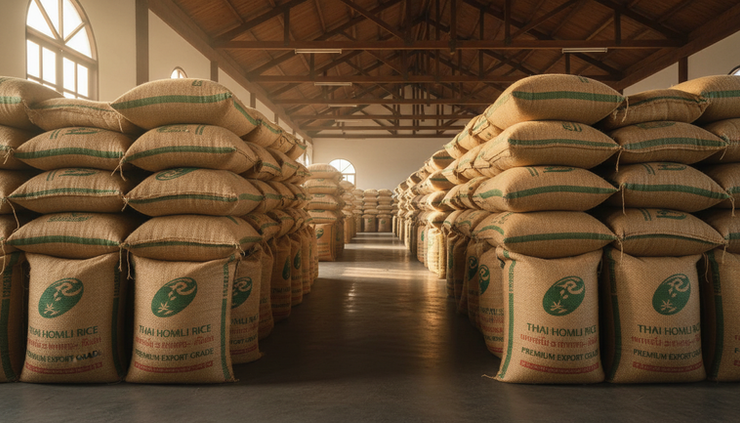
Woven polypropylene bags
Vacuum packs for premium retail lines
For export, packaging should protect the rice from moisture, pests, tearing, and odour transfer. Rice absorbs smells easily, so clean storage and careful container loading matter.

Private-label packaging adds more steps. Labels may need local language, nutrition panels, barcodes, origin statements, cooking instructions, and importer details. A wholesaler with export experience can help prepare artwork requirements, but final label compliance should be checked for the destination market.
How pricing works in the wholesale market
Rice prices move with crop supply, export demand, freight rates, packaging cost, exchange rates, and grade. That is why a quote should always define the exact product and terms.
The phrase Thai Hom Mali Rice Price can mean very different things depending on whether the quote is for loose bulk rice, 25 kg export bags, private-label retail packs, or a mixed container. A low number is not useful unless the specification is clear.
A proper wholesale quote should include:
Rice grade and broken percentage
Crop year or freshness description
Packaging type and bag size
Minimum order quantity
Incoterms, such as FOB, CFR, or CIF
Loading port
Estimated production or loading time
Payment terms
Document list
Freight can change the final landed cost more than expected. A supplier may offer a good ex-factory price, but if container loading, port handling, and shipping are not planned well, the total cost rises.
For stable purchasing, many buyers work with scheduled orders instead of buying only when stock runs low. This helps reduce supply gaps and gives the wholesaler time to secure better lots.
Documents and quality checks matter
Rice is a food product, so documentation is part of the trade. Exact requirements vary by country and buyer, but common export documents may include commercial invoice, packing list, bill of lading, certificate of origin, phytosanitary certificate, fumigation certificate, and inspection or quality reports.
Some buyers also request a sample before placing a full order. This is a sensible step, but the sample must represent the shipment. A beautiful sample has little value if the shipped rice comes from a different lot.
A useful quality check includes:
Visual grain inspection
Aroma check
Cooking test
Moisture review
Broken grain review
Packaging strength check
Cooking tests are often overlooked. Rice can look excellent raw yet fail in texture after cooking. Hom Mali should cook soft and fragrant, with grains that hold their shape well.
Choosing the right wholesale partner
A dependable wholesaler communicates clearly and does not avoid details. Good suppliers know that repeat business depends on trust, not just the first price.
Look for a wholesaler that can show:
Clear specifications for each grade
Consistent access to supply
Proper storage and handling
Experience with export loading
Flexible packing choices
Transparent document preparation
Willingness to provide samples or photos of goods
Clear answers about shipment timing
The best partnerships are built on matching expectations early. If the rice is for premium retail, say so. If it is for restaurant use, cooking performance may matter more than perfect visual appearance. If it is for repacking, bulk bag strength and clean milling become key.
A practical way to compare suppliers
When comparing offers, avoid judging by price alone. Build a simple comparison sheet and ask every supplier for the same details.
A useful supplier comparison should cover:
Product specification
Check grade, broken percentage, moisture, crop year, and origin.
Packing format
Confirm bag size, material, label needs, and pallet requirements if any.
Order terms
Compare minimum order quantity, lead time, payment terms, and shipment terms.
Quality proof
Ask for recent product photos, sample policy, and available certificates.
Communication
Notice how clearly the supplier answers technical questions.
A serious Thai Hom Mali Rice Wholesaler should make this process easier, not harder. If the supplier cannot explain what is being sold, the risk moves to the buyer.
The takeaway for bulk buyers
Thai Hom Mali rice earns its reputation through aroma, texture, origin, and careful handling. In wholesale trade, the right purchase depends on clear specifications, honest grading, proper packing, and reliable shipment planning.
Choose a partner that treats rice as a quality-sensitive food product, not just a commodity in a bag. The best wholesaler helps protect the grain’s value from the mill to the final customer.


Comments